


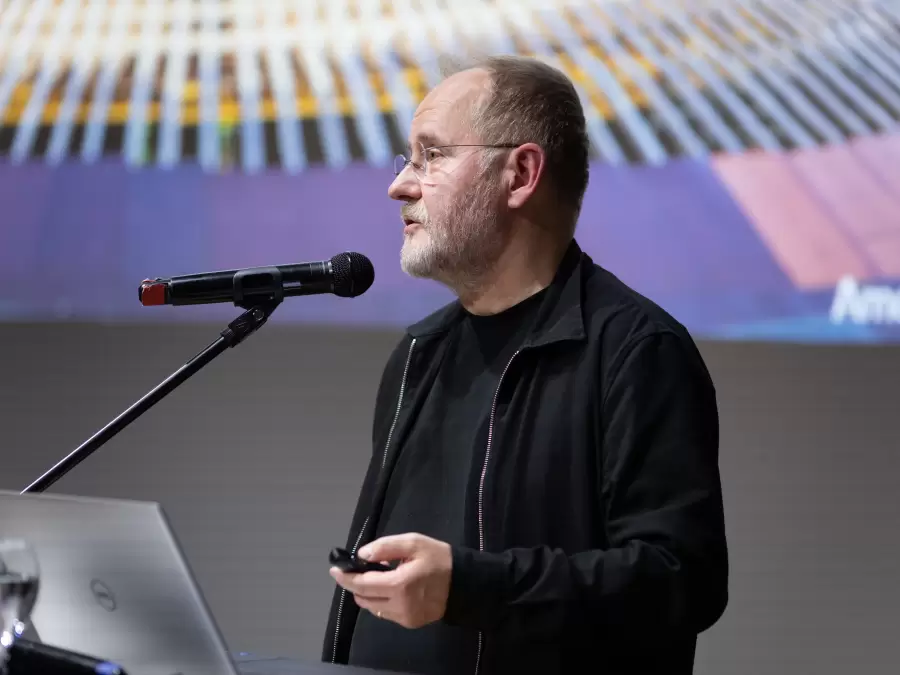
According to Finnish architect Samuli Miettinen, architecture is not just a physical structure – it is an active verb, a way of expressing who we are. Miettinen is known as the co-founder and partner of the renowned firm JKMM architects– his career has consisted of winning multiple competitions, always with a mission of creating spaces that foster community, well-being and beauty. In November, he is visiting Budapest in cooperation with FinnAgora, giving a lecture at MOME university as well as meeting with architecture students at Arkki school of architecture.
– I grew up in a family that valued the arts deeply, and that environment shaped my creativity from a young age. I noticed early on that I understood the world in a highly visual and three-dimensional way. A habit of reading, exploring, and thinking across disciplines led me naturally toward architecture, even though no one in my family worked in the field. My father’s involvement in restoring old churches gave me my first look into architectural work, and that spark eventually grew into the sense that this profession brings together all the things I’m drawn to, Miettinen says.
Pic: Laszlo Szucs
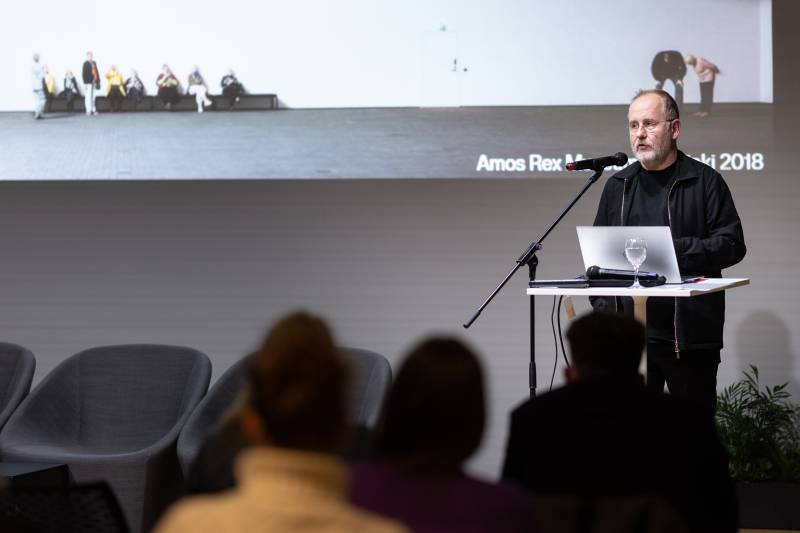
The focus during his lecture at MOME is to show examples of how a more humane form of architecture can look in practice. The office’s projects range from small daycare centers and renovations to large new-build projects, such as a 100,000-square-meter central hospital building, which brings its own challenges.
– While the point of this new hospital building is to save on health care costs, finding solutions to care processes and improve results, it functions as a kind of care-machine - yet one that remains profoundly humane, designed with the purpose of genuinely helping people. The hospital is a place where people are given care - it is the architect’s role to help.
In addition to this, buildings need to work together with the surrounding city in order to create synergies, affecting city life in a positive way.
– For example the Tammela football stadium breaks boundaries by merging different typologies – a public building that seamlessly connects housing, retail and business spaces. This is a building that activates its surroundings - especially on game days!

Pic: Laszlo Szucs
Over the course of his career, Miettinen has observed shifts in the values and resources that shape the work of the architect. As public-sector budgets have tightened, price-driven procurement has increasingly replaced quality-driven selection – a development he believes will eventually become costly for society. This shift is visible in the sharp decline of architectural competitions that were once a central tool for fostering high-quality, integrated solutions.
– An architecture competition is a pure competition of quality, which breeds quality and integrated optimization, Miettinen explains. – They may carry a higher price tag, but the value they produce is significantly greater. The overall development of quality is currently falling behind due to the economic imperatives.
Changes in the technicalities in building processes themselves has further reshaped the role of the architect. Instead of focusing solely on design, architects often act as mediators, navigating differing agendas.
At the same time, he notes a worrying haste in tearing down older buildings. Restoration, he argues, is both a skill-building opportunity and often a cost-efficient option.
– We are in such a hurry to demolish, he says. Instead of tearing old buildings down, we could learn new skills through the process of restoration. There are always alternatives.

Pic: Nuutti Päällysaho
Regarding advice for prospective architects, Miettinen highlights the importance of collaboration.
– It is a beautiful thought which also fits in well with architecture. I also always strongly encourage working together - rather than merely fighting for one’s own views, learning how to defend the perspectives of others and looking for consensus is important. We all have a lot to give to each other, and most of the time the common view is the best one.
Miettinen ends his lecture at MOME with a quote by photographer Henri Carter-Bresson which he feels fits well into the philosophy of architecture as well: “Putting one’s head, one’s eye and one’s heart on the same axis” - a reminder that architecture is at its best when intellect, perception and empathy are aligned.
Text: Linn Svanberg